Energy Explained: Types, Generation, and History
- Sikander Manzoor
- Physics
- April 2, 2026
Table of Contents
Energy powers everything in daily life, transforming between forms like electrical, thermal, and kinetic. This article explains its types, origins, and historical evolution, showing how humans harnessed energy from fire to electricity and modern technologies today.
Introduction
In our day-to-day life, we do a lot of activities and use a lot of devices and appliances that all seem to work…. Just because they do, however…. That is not the case. All of our day-to-day activities, all of the devices (be it electronic or electric), and all machines use a magical quantity called ENERGY. Now this magical quantity, as it may seem to you, is not all that “magical”. It is, in the simplest of words, the capability to do work or the quantity that is used in us doing work. When I say that it is used up, I don’t mean that it just vanishes. I mean, that gets converted from one form to another. Now you may be like You didn’t even tell us that it had forms! But my friend, it does. It is of many forms, but the most commonly known ones are:
- Electrical energy: The reason your phone, your fridge, or any other appliances work is due to this. It is the energy in the form of moving electric current.
- Thermal energy: It’s simply heat energy.
- Potential energy: Energy that something has when it is at a height.
- Kinetic energy: The energy that a body has when moving.
- Nuclear energy: The energy that is released during Nuclear reactions.
- Mechanical energy: The sum of Kinetic and potential energy.
- Chemical energy: Energy emitted by chemical reactions.
These were all the common ones that one needs to know, but when we move forward, we will see more forms of energy. But one thing to keep in mind is that most of the forms of energy actually come from the sun in the form of radiant energy and then are converted by us. The sun is the ultimate source of energy.
The History of Energy
Throughout the ages, humans have used many forms of energy, some of which they didn’t know about and some of which they did.
● During the prehistoric ages or when man was a caveman (ooga-ooga), they mainly relied on muscle power. All the energy that was being used was in the form of fats and lipids in their body (from the food they ate). Until the discovery of fire, which allowed them to utilise thermal energy to their advantage in things like cooking, and the wood they were burning was in the form of an energy we call biomass energy today.
● Then, in ancient civilizations, when man was not a caveman, but had become an early farmer, people of that time used wind energy and the Kinetic energy of flowing water to sail boats (wind) and use water wheels to grind grains.
● During the Industrial Revolution (the time when mass production of goods using machines became popular), coal was introduced as a major fuel. It could burn for long times, which meant that it could efficiently evaporate steam and…. As you would expect, it was the same age in which steam engines were invented by James Watt, which converted thermal energy to mechanical energy.
● In the 1800s to 1900s, we learnt how to generate and use electricity. Michael Faraday, Nikola Tesla, and Thomas Edison (scientists) discovered how electricity could be generated by magnets, transported over long distances, and used in better lighting (the bulb that you are reading this under is made by Thomas Edison, BE THANKFUL.).
● And after the 1900s, we started using petroleum oil, which was used in cars, aeroplanes, and modern transport. Plastic is also because we discovered petroleum (YES WE DID).
● Some more time later, we started using nuclear energy, which allowed us to make nuclear bombs and use energy released by nuclear fission to generate steam and rotate a turbine (look at your DC motor at home, if you have one, a turbine is just that, but reverse, if the fan is rotated, it generates electricity.).
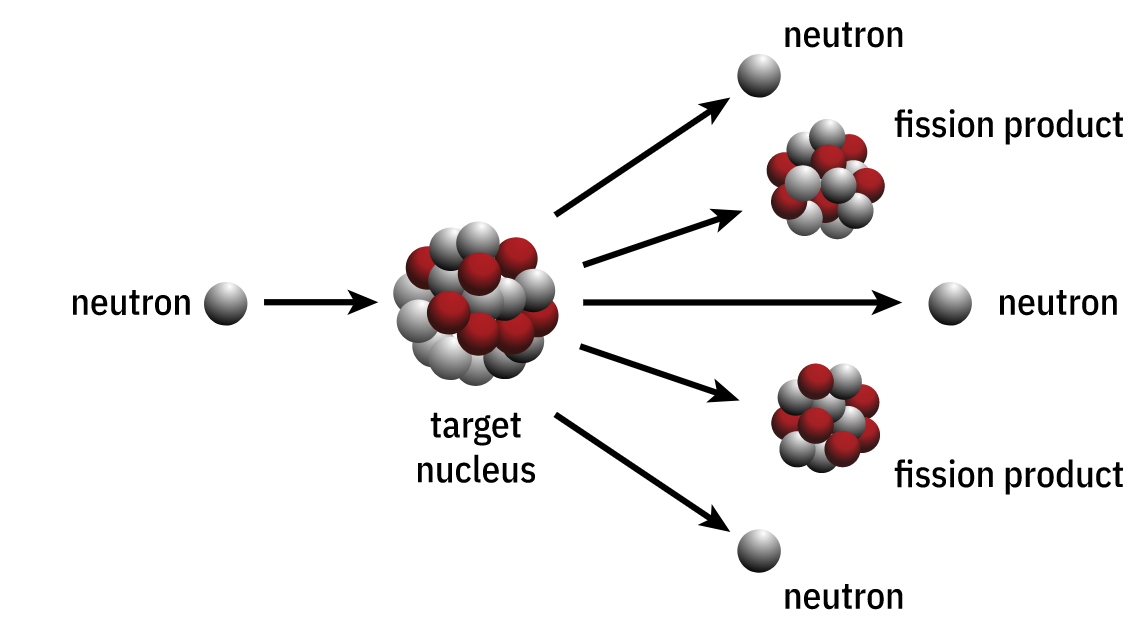
Nuclear fission basics
Here a neutron (the neutral or no-charge particle [unlike, protons which are positively charged and electrons which are negatively charged, it has no charge] in an atom(everything is made up of these balls) that are present in nucleus), is shot at the nucleus of a heavy atom like uranium which breaks into smaller nuclei, releasing more neutrons and a whole lotta energy. It results in a chain reaction. This is nuclear fission.
This is pretty much all about how we have levelled up to having all of the forms of energy we use today, and how today we use solar panels, wind mills, hydroelectricity (A fancy name for electricity generated by water), and whispers.Hey… you want to know a secret? A cheat code to know how most electricity is made… well, it won’t be free… Only if you continue to read my next articles will I tell you… ok idk whether you agreed, but I’ll assume that you did. Did you know that most electricity generation is done by turbines? Yeah, hydroelectricity- fast flowing water from a height rotates turbines, nuclear power plants- energy from nuclear fission heats water into steam to rotate turbines, coal power plants- coal heats water into steam to rotate turbines, and a few more! Only solar panels, wind mills, and batteries directly generate electricity.
Conclusion
Hey! I know you are like That’s it! I thought it would be longer! I know that I mainly did it because it is just the first article. You can’t remember everything in one sitting, even though this was more than something you could read in one sitting. I know you tried, good job! Now onto our ACTUAL conclusion here it is! Before that, CHECKLIST!
Checklist
● Energy is the capability to do work; without it, you can’t do anything, not even walk.
● The commonly known forms of energy are thermal, nuclear, radiant, Kinetic, potential, mechanical, chemical, and electrical.
● The order of the forms and conversions of energy learnt by us was:
● thermal energy in the caveman era
● Utilisation of kinetic energy of wind and water.
● The conversion of thermal to mechanical energy by a steam engine.
● Discovery of the effective generation and usage of electricity, like AC (alternating current, meaning that we made electric current dance back and forth to allow it to be transported without much loss), bulbs, and most importantly, it could be generated by magnets (turbines 😈).
● Nuclear fission in the mid-1900s.
● You will read all my next articles. I know you will.
So, now that the checklist is complete. We will be concluding this article by knowing that science is not hard, nor is it simple. Now you may tell me that this article was not that difficult to understand, so how could science be difficult? My naive friend, if you deeply read this article, then that means you haven’t seen the world much. All the beauty of science doesn’t lie in its theories, but in its applications. No matter how hard we try, we can’t outsmart physics or chemistry; we must find hints they have left in this world and use them to unravel their mysteries. That’s science, and that’s how we got this far, so keep learning. Maybe you’ll find one someday…
In the next article, I will discuss current energy topics, key innovations that could be developed, and how we currently generate electricity.
Learn less, but learn completely.